The Automotive Marketplace
A Mexican automotive marketplace set out to create a more trustworthy way to buy and sell used vehicles, including competitive auctions.

Understanding the Mexican Automotive Market Friction
In 2021, the used car market in Mexico was booming but deeply broken. Despite high demand, transactions were plagued by insecurity and mechanical uncertainty. Our mission was to build a digital-first marketplace that prioritized safety and transparency for both parties.
The trust problem
Transactions were plagued by physical safety fears and fraud. Buyers faced uncertainty about mechanical states and legal title history.
Two sides of the marketplace
A cohesive ecosystem balancing high-conversion seller onboarding with a real-time, verified auction platform for buyers.
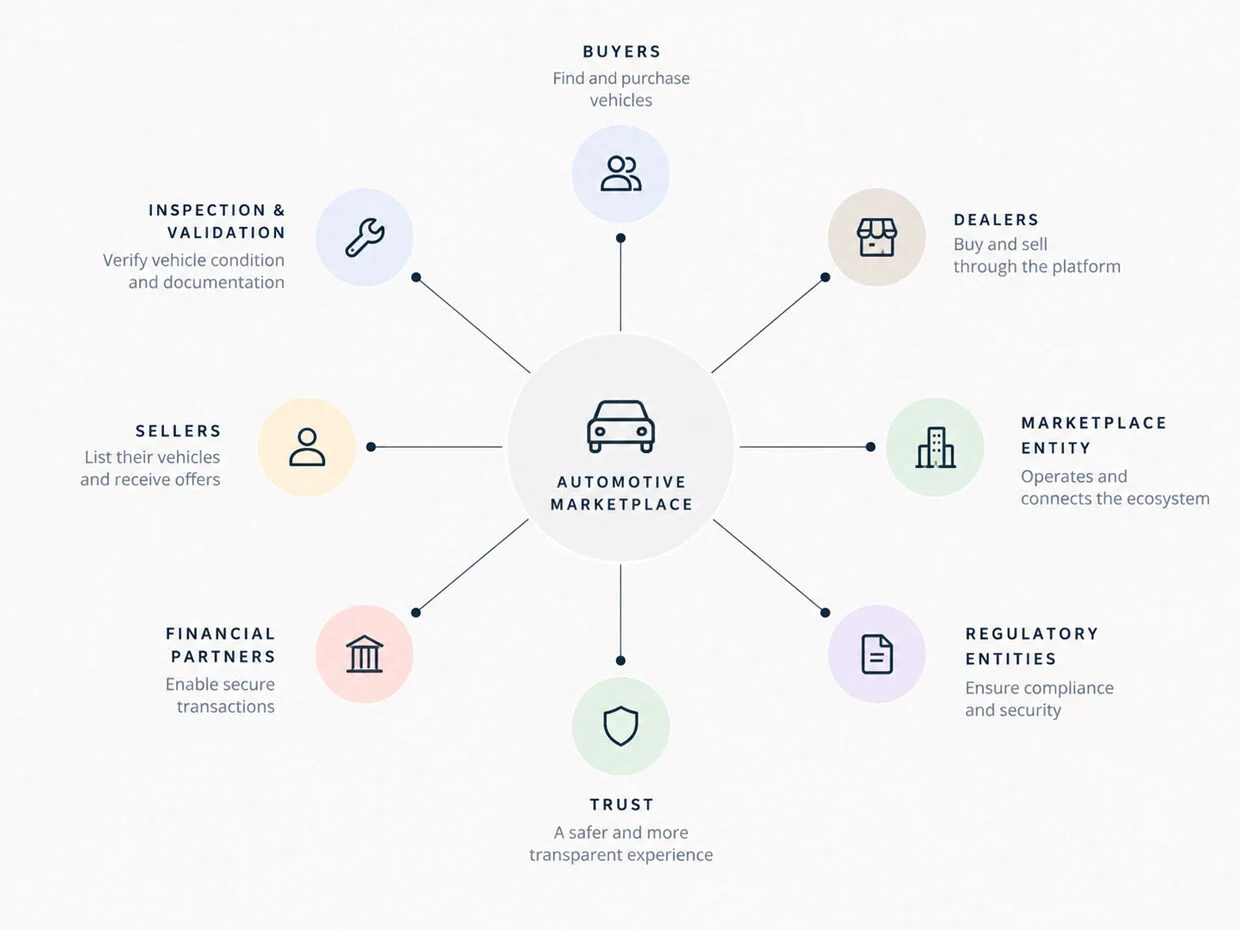
Designing Trust Into a High-Stakes Transaction
Selling a used vehicle is not a typical ecommerce transaction. Users needed to provide extensive information about a high-value asset before knowing what kind of offer they might receive. Every additional step created friction, but removing too much information could reduce buyer confidence later in the process.
Seller friction
Asking for too much information too early could cause sellers to abandon the process before receiving value.
Vehicle confidence
Buyers needed enough structured information to evaluate vehicles without relying entirely on the seller's description.
Marketplace trust
The experience had to make both sides feel protected throughout a transaction involving significant financial and mechanical uncertainty.
Reducing the Distance Between 'I Want to Sell' and 'What Is My Car Worth?'
The selling experience was structured as a progressive flow. Instead of confronting users with one large form, we separated vehicle identification, specifications, condition, photos, and seller information into manageable steps.
Ask only for the information needed to move confidently to the next step.
One Vehicle. Two Very Different Experiences.
The seller experience focused on simplicity and momentum. The buyer side required the opposite: structured information, comparison, vehicle condition, pricing context, and auction activity. The challenge was designing both experiences around the same underlying vehicle data.
Seller
- Progressive disclosure
- Simple language
- Guided data entry
- Clear progress
- Confidence before commitment
Buyer
- Structured vehicle data
- Condition visibility
- Pricing context
- Auction activity
- Decision confidence
Turning Vehicle Data Into a Confident Selling Experience
The final experience connected structured vehicle information, valuation, validation, and marketplace activity into a single guided journey. Sellers could understand what was required, where they were in the process, and what would happen next.
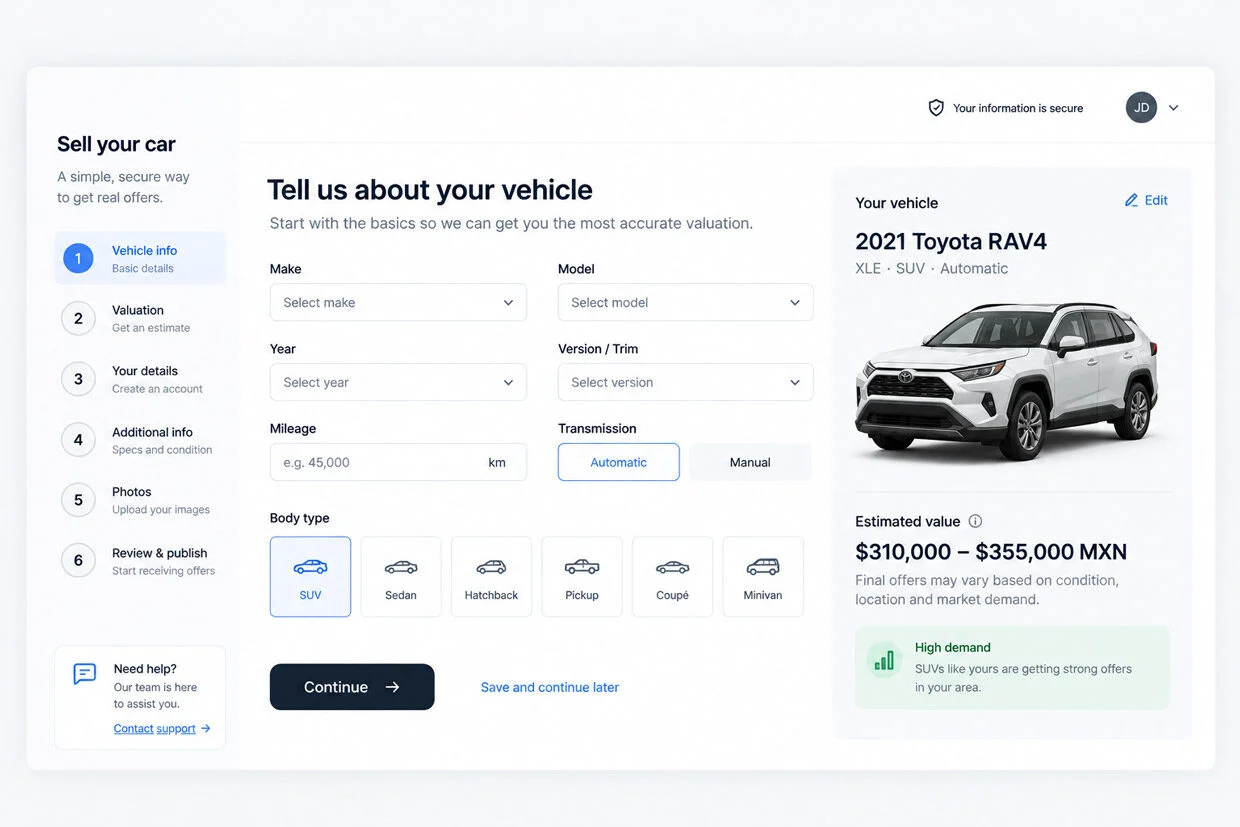
Guided
A clear step-by-step process reduced the perceived complexity of listing a vehicle.
Transparent
Valuation, requirements, and next steps remained visible throughout the experience.
Structured
Vehicle information entered by sellers became reusable marketplace data for buyers and internal workflows.
Trust Wasn't a Feature. It Was the Product.
For a marketplace handling high-value physical assets, visual polish alone could not create confidence. Trust had to emerge from the interaction model: clear expectations, structured vehicle information, visible validation, understandable status changes, and consistent feedback.
The best marketplace experience isn't about removing friction. It's about making the right friction feel worthwhile.
This project reinforced an important lesson for me: simplification does not always mean asking for less. In complex products, good UX is often about sequencing complexity so users understand why information is needed and what value they receive in return.
Complex workflows become manageable when the product establishes value before asking for effort.